Monday, June 30, 2008

Bill Gates: PC Genius, Internet Fool

Bill Gates: PC Genius, Internet Fool
TIME Sunday, Jun. 29, 2008 By JOSH QUITTNER


Bill Gates, who for years was the richest man in the world, is also one of the smartest. But even he couldn't figure out how to beat the Internet-how to transition his grand old monopoly software company, Microsoft, into a business that thrives on the Net. And so he begins his retirement today from Microsoft as the PC era's biggest winner, and the Web era's most spectacular casualty.

It's pretty well known by now that the Internet, for all its world-flattening glory, is a destroyer of businesses without parallel. How many companies roared along for decades, minting money, only to see the Internet eat their business plans? We live in a media age and the media industry is Exhibit 1 in the murder trial. Newspapers, magazines, music, television, movies — all of the traditional models are dead or dying as bloodied moguls everywhere scramble to survive. But the Net has brutalized old-line business across most industries-retail, tele-com, financial services and the technology industry itself, is, ironically, no exception.

Few companies not born on the Web have figured out how to thrive there. (Apple, with its post-PC iPhone could be the shining exception.) As Gates turns his attention full time to philanthropy, I wonder what will be left of the great company he founded, Microsoft, by the time Gates picks up a Nobel Prize for Peace. Clearly, a business with $26 billion in cash reserves isn't exactly at death's door. And Microsoft continues to be enormously profitable, thanks to its operating system monopoly. Thanks, that is, to Gates's genius.

But big, complicated operating systems such as Microsoft's latest, Vista, aren't necessary in the Web Age, where applications are delivered for free and on demand — often without users even being aware of it. The Net is where the money is, and it's the one place that Gates-like so many others-hasn't left his mark.

He saw the Internet missile coming of course. But by the time he sounded the alarm, it may have been too late. (Read his famous "Internet Tidal Wave" memo, sent to the troops May 26, 1995, over a year after the browser company known as Netscape launched.

Gates was always more accustomed to being a disruptor than being disrupted. At the age of 25, he licensed a primitive operating system, PC-DOS, to IBM for $80,000 rather than sell it outright, a move that's usually ranked as one of the Greatest Business Moves of All Time. Gates figured that many PC makers would copy IBM's open architecture, and make their own PCs; they'd need to license an operating system, too. PC-DOS soon became MS-DOS, an operating system for all IBM clones, and Microsoft was on its way to becoming the one thing that billions of PCs around the world would have in common.

From 1980 until 1994, when Mosaic/Netscape emerged, Gates played a scratch game, parlaying his little "Micro- Soft" company into an empire that defined the PC Era. By opening up Windows to third-party developers, he created a platform that made many developers rich, and built out an eco-system that put a desktop in almost every home.

But there is no greater blinder than success, even for a visionary like Bill Gates. By the time he realized the tech world was quickly shifting from PCs to the Network that connected them, his moves were limited. A fiercely competitive man, he reached for the obvious lever, and attempted to tie the late-starter Internet Explorer browser to the monopoly he created, the Windows operating system. The move was mercilessly effective and beat back rival Netscape, which immediately saw its commanding share of the browser market disappear.

It was also illegal. With Netscape crying foul, the Feds successfully pressed an anti-trust suit against Microsoft. The PR damage-Gates acting insolent on the witness stand, showing a convenient a lack of memory about key business decisions-turned out to be short lived and is all but forgotten as Gates remakes himself as a philanthropist. But the court's decree forced the great general to march cautiously into the future. He may have won the Battle of the Browser but he would start to see major casualties in the Internet War.

Gates built or bought all manner of things to conquer the Net, but few managed to be anything more than also-rans in the innovation game. In 1995, he launched a gated online service, MSN; a Web-based email client, Hotmail was purchased in 1997; a search engine, MSN Search, launched in 1998 using a third-party product as its core; a chat client, Messenger was released in 1999; and last year it bought an online advertising platform, aQuantive and became a significant, though minority investor, in social network Facebook.

While Microsoft is exponentially larger than Google — number 44 on the Fortune 500 list versus Google at 150 — Google's web business (advertising mostly) is growing so fast, it's poised to rival Redmond's operating system revenues by 2010. And that's the problem. As more and more of what Windows does moves up into the cloud-into Google's always-on, give-'em-whatever-they-want-for-free servers-what becomes of the company that Gates built?

The smartest move Gates could make right now is to get out of the way. (Steve Ballmer should, too; pursuing Yahoo is a pretty good hint that his master plan for the Web is, like Gates's was, to try to buy Microsoft's way into the game.) There are many smart and talented people inside Microsoft who know what to do. (Blow up Vista and abandon its next iteration, Windows 7, and start from scratch, is but one excellent idea.

That will probably work. And if not? Maybe we'll see Gates return, a Nobel in his pocket, ready to wrestle with the Web once again.

Sunday, June 29, 2008

The 10 Commandments of Web Design

The 10 Commandments of Web Design

The Internet is constantly changing. BusinessWeek.com spoke to a bevy of experts and distilled the must-follow rules top online designers live by in 2008

by Matt Vella
Businessweek Special Report
Web Design

Since the Internet emerged as a major force, altering everything from the way people work to the way they date, it has been a roller-coaster ride that made the world giddy. Microsoft (MSFT), Netscape, et al. fought the browser wars, Web standards were championed, and the Web became community-minded and social, ushering in the reign of Facebook, Flickr (YHOO), and YouTube. From boom to bust and back again, with staggering amounts of money changing hands at every point, the online industry rides on with no end in sight.

The Net has also attracted prophets, gurus, theorists, and evangelists of every stripe. Many of their promised game-changing technologies—Jini, DHTML, and countless others—never panned out, while seemingly simple innovations—metadata, XML, and CSS—have led to major breakthroughs. Meanwhile, Web design vogues from the effervescent jumble of HotWired to the stark utility of Google (GOOG) have continued to evolve and become more contradictory—and entrenched.

To try and make sense of it all, BusinessWeek.com canvassed a broad range of Internet luminaries to discover the design rules they live by right now. Contributors ranged from the guru of Web usability, Don Norman, co-founder of the Nielsen Norman Group, to the design director of NYTimes.com, Khoi Vinh, and John Maeda, president-elect of the Rhode Island School of Design. These 10 commandments of Web design for 2008 are the combined results of our survey. For the full list of contributors, see the end of the story.

1. Thou shalt not abuse Flash.

Adobe's (ADBE) popular Web animation technology powers everything from the much-vaunted Nike (NKE) Plus Web site for running diehards to many humdrum banner advertisements. But the technology can easily be abused—excessive, extemporaneous animations confuse usability and bog down users' Web browsers.

2. Thou shalt not hide content.

Advertisements may be necessary for a site's continued existence, but usability researchers say pop-ups and full-page ads that obscure content hurt functionality—and test a reader's willingness to revisit. Elective banners—that expand or play audio when a user clicks on them—are much less intrusive.

3. Thou shalt not clutter.

The Web may be the greatest archive of all time, but sites that lack a coherent structure make it impossible to wade through information. Amazon.com (AMZN) and others put their sites' information hierarchy at the top of their list of design priorities.

4. Thou shalt not overuse glassy reflections.

Apple (AAPL) often sets the standard for slick and cool—in all forms of design. But some experts say the company\'s habit of creating glassy reflections under photos of its products has been far too commonly copied, turning the style element into a cliché.

5. Thou shalt not name your Web 2.0 company with an unnecessary surplus or dearth of vowels.

The Web has brought with it a strange nomenclature that's only got weirder over time. Hip, smart Web sites have been named either with a superfluous number of vowels or strategically deleted ones. Cases in point: Flickr, Smibs, and Meebo. These names are memorable but destined to sound dated.

6. Thou shalt worship at the altar of typography.

Designers say that despite the increase in broadband penetration, plain text has gotten a second wind in cutting-edge Web design. Mainstream sites such as Craigslist have led the way, while designer-oriented sites such as Coudal Partners and John Gruber's popular Daring Fireball blog represent the cutting edge.

7. Thou shalt create immersive experiences.

Merely looking good doesn't cut it anymore. Sites like Facebook and YouTube draw in users with compelling content and functionality. Creating Web sites that can capture and hold users' attention is what matters most.

8. Thou shalt be social.

Web 2.0 is everywhere. MySpace (NWS) and similar sites only launched the trend of having users communicate and interact—sometimes obsessively—on browser-based sites. Designers are now filtering those same elements into diverse sites, from smart advertising to online office productivity.

9. Thou shalt embrace proven technologies.

Wikipedia, YouTube, Facebook, and their cohorts have become a part of daily life. Sites that can incorporate these elements into their design will connect with users in a meaningful way by providing functionality and an interface with which they're already familiar.

10. Thou shalt make content king.

Though the slogan is old, it still stands. Aesthetic design can only go so far in making a site successful. Beautiful can't make up for empty.

Saturday, June 28, 2008

Verne Troyer: Big time pimping with his ho's


The 30 second clip on TMZ was extraterrestrial, pathetically funny.

Friday, June 27, 2008

Ryan Sook, brilliant but slow artist

My current dream supercar: The Bentley Continental GT Speed

July 11th can wait

Rogers' pricing plans are outrageous. Consider that one Youtube video is at least 10 MB & you can see that anything but an unlimited data plan just doesn't cut it. Maybe when they see consumers not buying they'll change their plans. I'll wait. Walt Mossberg's iPhone video review is still cool.

Rogers releases iPhone pricing

Rogers releases iPhone pricing

JACK KAPICA
Globe and Mail Update

June 27, 2008 at 11:04 AM EDT


Canadians finally have a chance to see how much Apple's new iPhone 3G will cost them.

Voice and data plans will start at $60 per month when the coveted device arrives in Canada July 11, Rogers Wireless announced Friday morning.

Fido, which is owned and operated by Rogers Communications, made the same announcement this morning.
Related Articles

All iPhone plans are based on a three-year contract, Rogers said.

The cheapest plan, for $60, includes 150 minutes of voice calling (unlimited Evenings and weekends) with 400 megabytes of data; 75 sent text messages with unlimited incoming text messages and visual voicemail messages.

Three other plans are available: a $75 package that includes 300 minutes of phone calls with 750 MB data and 100 sent text messages; a $100 package that includes 600 minutes of phone calls with 1 GB of data and 200 sent text messages, and $115 per month for 800 minutes of phone calls, with 2 GB of data and 300 sent text messages.

Rogers also announced two extra plans on top of the four monthly plans: a $15 monthly value pack that includes Caller ID, Who Called, Caller Ring Trax, 2,500 Sent Text Messages and 2,500 Call-Forwarding Minutes; and a $20 monthly value pack including Caller ID, Who Called, Caller Ring Trax, 10,000 Sent Text Messages and 6 p.m. Early Evening Calling and 2,500 Call Forwarding Minutes.

The pricing includes unlimited Wi-Fi access at all Rogers and Fido hotspots, Rogers added.

Rogers has described the plans as “high-value price packages to meet the needs of Canadian iPhone aficionados.”

The announcement of the packages has been much anticipated because the iPhone relies on a large amount of data transfer. Previous plans, if they had been applied to the iPhone, which was not available in Canada, would have made the monthly costs of the iPhone prohibitively expensive.

The iPhone 3G has a data transfer rate twice as fast as the EDGE network used by original iPhone, a built-in global positioning system, and support for Microsoft Exchange ActiveSync for e-mail.

“We've designed a pricing structure that offers affordable, flexible voice and data packages so Canadians can truly unleash their iPhone 3G experience on Canada's fastest wireless network,” Rogers chief marketing officer John Boynton said in a statement.

Rogers calculates that the plan using 400 MB of data is the equivalent of 200,000 text e-mails or 3,100 web pages or 1,360 photo attachments. The 2GB plan represents up to 1,048,000 text e-mails or 16,000 Web pages or 7,000 photo attachments.

As General Motors goes so goes America

Thursday, June 26, 2008

More pain ahead for banks, car makers, consumers - Jun. 26, 2008


Economic muddle sinks stocks
High oil prices and a still-weak financial sector mean the economy - and the markets - face more pain ahead.
By Colin Barr, senior writer
Last Updated: June 26, 2008: 5:19 PM EDT


NEW YORK (Fortune) -- Thursday\'s stock market selloff reflects a sobering truth: Nine months of strong medicine have failed to cure the credit crisis and left the economy in a weakened state.

The Dow Jones Industrial Average plunged 3% to a 21-month low on Thursday, a day after the Fed held its key interest rate target steady for the first time following nine months of aggressive rate cuts and loans to financial firms. The central bank said it is concerned about rising inflation but is also watching for signs that tepid economic growth will slow further.

The economy is struggling to muddle through a period dominated by two powerful negative forces. The Fed has cut rates by 3.25 percentage points over the past year in an attempt to shore up a weak, undercapitalized banking system swimming in bad loans tied to the housing bubble, and to cushion the loss of consumer spending power tied to falling house prices. But at the same time, consumers and businesses have been laboring under an increasing burden of surging food and fuel prices.

The problem now, from the point of view of Fed chief Ben Bernanke, is that trying to tackle either problem risks exacerbating the other. So the Fed is probably on the sidelines for the balance of the year - which means investors can look forward to more ugly selloffs like Thursday's, which left the Dow down 20% from last fall's all-time high.

"The resilience of the U.S. economy has been remarkable over the past 12 months as the credit crisis spread beyond the subprime mortgage market and oil prices soared, " economist Ed Yardeni wrote earlier this week in his daily newsletter. "Unfortunately, there may not be much more that the Fed can do to stimulate economic growth should the resilience of the economy continue to be tested by the credit crisis and oil prices."

Thursday's big losers included truckbuilder Oshkosh (OSK, Fortune 500), which lost a third of its value - costing shareholders some $830 million - after predicting high commodity costs will lead to a third-quarter loss. Other big decliners included automakers General Motors (GM, Fortune 500) and Ford (F, Fortune 500) the latter of which hit a low last seen back in 1985 as high gasoline prices swamp demand for sport utility vehicles. Also hit hard were financial firms Citi (C, Fortune 500) and Merrill Lynch (MER, Fortune 500), which dropped to new lows after analysts said additional mortgage-related losses could lead to more shareholder-diluting stock sales or, in Citi's case, possible dividend cuts. Bank of America, which dropped 7% and now trades at half its year-ago level, said it will cut 7,500 jobs in its purchase of Countrywide.

Soaring oil prices have led to massive losses at U.S. companies in energy-intensive businesses such as auto production and airlines, and have prompted some commentators to call for the Fed to start raising interest rates. But while consumers and many companies would surely benefit from lower food and energy prices, higher interest rates could put further pressure on growth, by reducing demand for goods and services. With May sales at General Motors, for instance, having plunged 30% from a year ago, lower consumer demand is not something struggling companies are looking for.

"The jury still is out as to whether consumer spending is out of the woods, " writes Northern Trust economist Paul Kasriel. "The motor vehicle producers would say 'no.'"

Another factor that's hard to overlook is the ill health of the big U.S. banks. Citi dropped 6% Thursday after analysts at Goldman Sachs put the stock on their "conviction sell" list, predicting second-quarter asset writedowns of almost $9 billion. Analysts at Sanford C. Bernstein downgraded Merrill Lynch to sell as well, saying the firm should take $3.5 billion in writedowns in the quarter that\'s about to end. Analysts at both firms indicated they have been too optimistic up till now in forecasting a financial sector recovery.

"The turnaround in business trends that we had been expecting in the second half of 2008 may not occur as quickly as we should have thought," Goldman Sachs analyst William Tanona said. "We see multiple headwinds."

Headwinds are the least of it, though. As Bernstein analyst Brad Hintz wrote, the problem for big financial companies is that their most profitable businesses, those tied to the fast and furious debt markets of the earlier part of this decade, have essentially ceased to exist. Brokerage firms have shown some ingenuity over the years in exploiting new opportunities in the financial markets, but it will take a while for those to develop.

"We are not recommending investors buy canned goods and bottled water at this point," Hintz writes, adding that low short-term rates and a steeper yield curve will eventually lay the groundwork for a recovery. "But currently the trend lines of Wall Street's high-margin institutional businesses are pointing south."

Unfortunately, those aren't the only trend lines pointing in that direction.
First Published: June 26, 2008: 1:32 PM EDT

$7-a-gallon gas, 10-million fewer cars: Rubin

$7-a-gallon gas, 10-million fewer cars: Rubin

MATTHEW TREVISAN

Globe and Mail Update

June 26, 2008 at 12:53 PM EDT

A new forecast calls for gasoline prices to hit $7 (U.S.) a gallon in the next two years and oil to soar to $200 a barrel by 2010.

The report by CIBC World Markets also predicts there will be 10 million fewer cars on the road in the United States by 2012.

“Over the next four years, we are likely to witness the greatest mass exodus of vehicles off America's highways in history,” Jeffrey Rubin, the lead author, wrote in Thursday's report.

By 2012, the report predicts, the average miles driven in the United States will decrease by 15 per cent, and sports utility vehicles, which accounted for almost 60 per cent of U.S. market share in 2006, will drop to less than half that level. Overall vehicle sales will drop by 2012 from 14 million to 11 million – the lowest level since the early 1980s.
Related Articles


“While some of the current weakness in vehicle sales can be attributed to the economic slowdown, we estimate that highest gasoline prices have had almost twice the effect,” Mr. Rubin wrote with co-author Benjamin Tal.

Basic laws of supply and demand are “no longer operative” in the crude oil market, the report says, compelling CIBC economists to raise their target for West Texas Intermediate by $20 a barrel, to $150 next year, and by $50 a barrel by 2010, for $200.

“Higher oil prices spell stagflation for the U.S. economy next year, and we have marked down our GDP growth to barely over 1 per cent for 2009,” Mr. Rubin wrote.

The report also predicts that by late next year, gasoline sales in the United States, growing at a rate five times that of the rest of retail sales, will overtake grocery store spending as the largest item in households' non-vehicle retail spending.

All of this means a “quantum” shift in driving habits, the report says. Americans will drive less in smaller vehicles, perhaps mimicking countries in Europe where fewer people drive their cars to work than in the United States.

(In the United Kingdom, the report says, 60 per cent of people use cars to get to work compared to the more than 90 per cent of Americans.)

“Of course the flip side to this equation is public transit,” wrote Mr. Rubin and Mr. Tal. American “obsession with the car is mirrored in its avoidance of public transit.

“When it comes to taking the train, bus or subway, the U.S. ranks the lowest among OECD countries, just as it ranks the highest among the same group when it comes to the use of the car,” the economists wrote.

Earlier Thursday, OPEC President Chakib Khelil said in an interview that crude could rise as high as $170 a barrel this summer.

“I forecast prices probably between $150-170 during this summer. That will perhaps ease towards the end of the year,” he told France 24 television, according to a text of the interview released by the station.

The comments came as crude prices neared $135 per barrel, after rising about 40 perc ent this year.

Mr. Khelil said he doubted prices would climb as high as $200.

“I think that the devaluation of the dollar against the euro, if everything goes as I think it will, will be of the order of perhaps 1-2 per cent and this will probably generate an $8 rise in the price of oil,” he said.

The head of the Organization of Petroleum Exporting Countries, said it had been clearly established that speculation was affecting markets.

“It's not a question, but a certainty. The problem is the extent of that speculation on the market,” he said, adding that the effect of the subprime crisis in the United States had affected oil markets.

Kid Rock


Ah, the life of a half-assed rock star.

Cops bust alleged brothel-on-wheels in Miami


Eliott Spitzer can't catch a break.

Dubai 'shape-shifting skyscraper' unveiled


The 80-story Dynamic Tower in Dubai. Each floor of the tower would rotate independently, architects claim, creating an ever-shifting shape.

Wednesday, June 25, 2008

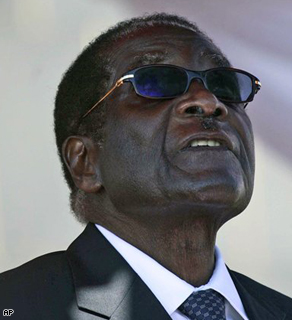
Robert Mugabe is crazy


Mugabe even has a Hitlerian moustache.

Search

Veoh


For more widgets please visit www.yourminis.com